Publisher Notes:
Research for this project from Ancient Sumerian Text to Modern Philosophy
Sophia is in every woman.
Not as an idea.
Not as a symbol.
As a living presence.
She appears early in the record as wisdom beside creation itself, speaking with authority and clarity. Later, she becomes harder to locate. Whether this change reflects interpretation, translation, or deliberate narrowing of her role, the effect is the same:
a voice once central becomes difficult to hear.
When something this important grows quiet in a culture,
the silence itself becomes evidence.
Sophia is now standing in the court, holding the quill and the gavel,
and she has questions.
She is not returning as a symbol from the past.
She is not asking permission to enter the room.
She is standing where she once stood before—
where decisions about language, medicine, time,
and interpretation shaped the human story.
She comes to examine the record.
Soul Pain explores what happened when humanity lost direct relationship with wisdom, rhythm, and creation—and how that loss still shapes women’s bodies, medicine, and spiritual life today.
This is not a reconstruction of mythology.
It is an investigation.
Drawing on biblical tradition, clinical observation across generations of families, ancient medicine, sacred manuscripts, and the lineage of the village healer, this work restores a framework in which wisdom is not abstract theology but
a living presence once again available.
Soul pain is the ache that does not belong to one moment, one wound, or one lifetime.
It is the unnamed grief many women carry without language:
the loss of internal direction
the loss of embodied knowing
the loss of rhythm with creation
the loss of authority over the body
the loss of continuity across generations
This book reframes that pain not as personal weakness, but as historical signal.
There was a time when wisdom stood openly within the structure of civilization.
Then her voice became difficult to hear.
Authority moved quietly:
from household to institution
from land to document
from body to system
from memory to permission
The absence was gradual enough to feel invisible.
But its effects were not.
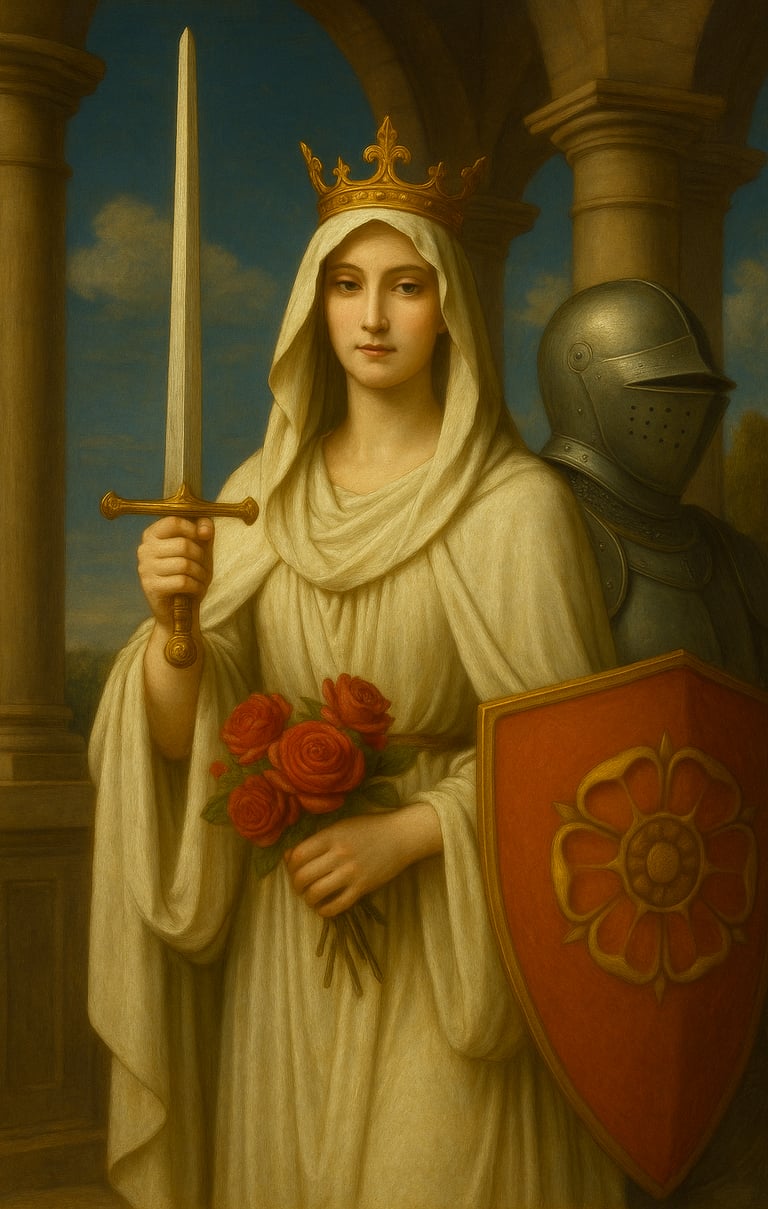
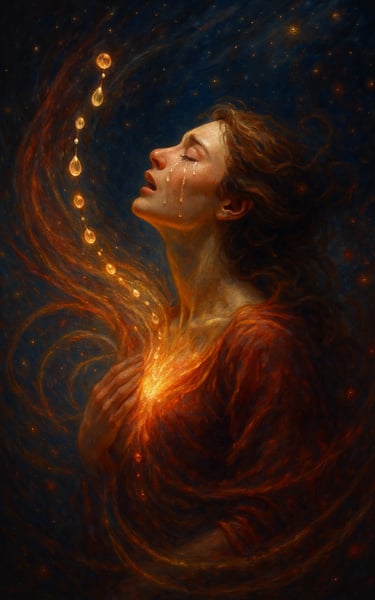
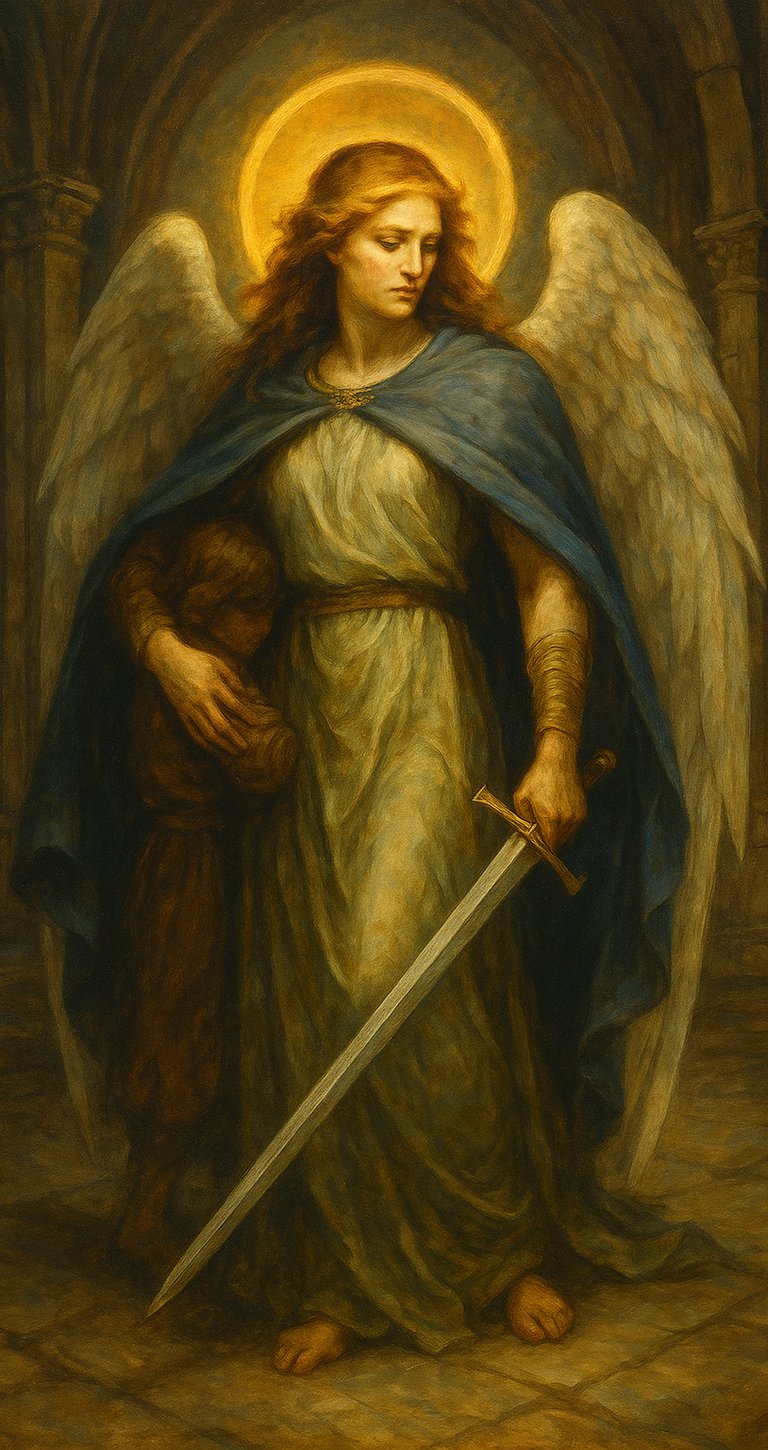
The two art pieces I created on the side bar are
'She lost her seat at the table' & Banished
This book follows the historical removal of wisdom from the places where decisions shaped the human story:
the breaking of calendars
the burning of manuscripts
the silencing of midwives and herbalists
the narrowing of interpretation
the transfer of medicine away from the body
These were not symbolic changes.
They altered inheritance.
At the center of this work is Sophia—not as metaphor, but as organizing intelligence once woven into daily life through land, nourishment, timing,
and intergenerational transmission.
When that structure shifts, the nervous system shifts.
When rhythm disappears, identity destabilizes.
When wisdom is displaced from the body, medicine changes.
The consequences appear across fertility, regulation, meaning, belonging, and resilience.
These are not isolated symptoms.
They are correspondence signals.
I did not set out to write a book about Sophia.
I set out to understand a question that had followed me my entire life:
What do women do with the knowledge do?
They carry it when there is no language for it anymore?
Inhereted, DNA, Genetic, Trends;
In my clinical years, I often worked with Grandmother, Mother, Daughter, and her children in one family, observing:
mineral inheritance patterns
stress-response signatures
reproductive timing shifts
endocrine adaptation
sympathetic dominance transmission
trauma physiology continuity
environmental toxicant layering
belief structures around health
and loss (or preservation) of embodied intuition
That is not routine clinical exposure. That’s lineage observation.
For twenty-one years I worked directly with Dr. David Watts in advanced metabolic and toxicology interpretation through hair tissue mineral analysis. That clinical work gave me a window into something deeper than physiology alone: the relationship between mineral balance, nervous system regulation, trauma, and spiritual resilience.
As I began tracing references to Sophia across scripture, wisdom literature, and early Christian writings,
I recognized something unexpected.
Women had not simply disappeared from positions of authority in healing and spiritual interpretation.
Their roles had been redistributed.
Their language had been renamed.
Their continuity had been hidden in plain sight.
There came a time in history when alliances formed that no longer included her.
Language narrowed.
Access tightened.
Authority consolidated behind walls she did not build and could no longer enter.
In councils, institutions, and systems that shaped medicine, interpretation, and time itself, decisions continued to be made—but without her presence.
This was the moment Sophia lost her seat at the table.
The consequences did not remain in manuscripts or monasteries.
They moved into the body.
Women who carried knowledge of plants, birth, timing, and the rhythms of healing were gradually displaced from recognized authority. Midwives became suspects. Herbalists became informal. Intuition became unscientific. Wisdom became anecdotal.
What had once stood in the center of community life was moved to the margins.
And yet it never disappeared.
Even now, many who work in natural medicine, birth care, and the healing arts still feel the echo of that displacement. They work quietly. Carefully. Sometimes cautiously. Often, without recognition equal to the depth of what they carry.
This book is not only an investigation of how that happened.
It is a declaration of allegiance.
An allegiance to Wisdom.
An allegiance to the continuity that was never extinguished.
An allegiance to Sophia.
Across thirty years of clinical practice, I have worked with thousands of women who carried the same experience:
They sensed something inside them that had no accepted language.
This book gives that experience a map.
It identifies what I call the loss of Sophia’s seat at the table—the gradual displacement of women’s authority in healing, interpretation, and community leadership across centuries of institutional change.
It also shows that the continuity itself never disappeared.
Sophia is not asking for her seat back.
She has already taken it.
And she invites us to walk with her through what happened.
SOUL PAIN
Healing God’s Creations with God’s Creations
Planned Publication Window
November – December 2026
Bonnie Sophia-Maria Rose, ND, MS, CTN
Wisdom did not disappear from the world.
She remained wherever life was still being tended.
SOUL PAIN
The Complete Timeline
Dr. Bonnie Sophia-Maria Rose, ND, MS, CTN
Dates · Characters · Turning Points · Fractures · Authority Shifts
COLOR KEY
GREEN border = Authority Established or Recovery
BLUE border = Key Figure
RED border = Fracture or Suppression
BROWN border = Erasure
PURPLE border = Turning Point
ERA ONE — THE HEIGHT OF HER AUTHORITY
Prehistoric through ~700 BCE. The baseline. What existed before the erasure began.
PREHISTORIC Feminine Governance — Before Written Record [AUTHORITY ESTABLISHED]
Evidence across cultures of women as healers, ritual leaders, keepers of seasonal knowledge, governors of birth, death, food, and community.
Goddess figures with tools and authority objects in burial sites
Governance appears integrated, not hierarchical
No formal subordination documented in the archaeological record
Soul Pain significance: This is the baseline Soul Pain measures the loss against.
~2600 BCE Ma'at — Egypt [FIGURE]
Egyptian goddess of truth, justice, cosmic order, and balance. One of the oldest named concepts of divine ordering intelligence. Pharaohs were accountable to her standard, not above it.
Predates Hebrew Sophia tradition
Wisdom as the force holding creation in right relationship
Sophia's conceptual ancestor in the Mediterranean world
Soul Pain significance: Establishes that ordered feminine intelligence governing civilization is not a late development.
~2600 BCE Isis — Egypt [FIGURE]
Healer, magician, protector of the dead, mother of creation. Her knowledge of herbs and medicine considered divine inheritance. Her tradition persists across thousands of years.
Spreads throughout the Mediterranean world
Medicine as sacred feminine inheritance
Lineage continues underground through the centuries
Soul Pain significance: One of the longest-running feminine authority traditions in recorded history.
~1800–1200 BCE Inanna — Sumer [FIGURE]
Goddess of love, war, justice, and political power. Her descent into the underworld and return is one of the oldest written narratives on earth.
Descent: stripped of powers one by one
Endurance through the underworld
Restoration and return
Maps directly onto the Soul Pain arc
Soul Pain significance: The original story of descent, stripping of powers, and recovery. Not metaphor borrowed later — the original.
~1800–1200 BCE Entu Priestesses — Sumer [AUTHORITY ESTABLISHED]
Temple priestess roles carrying genuine civic and spiritual authority. Not ceremonial — functional governance.
Soul Pain significance: Real governing power held by women inside institutional structures, before that structure narrowed.
~1479–1458 BCE Hatshepsut — Egypt [ERASURE]
Female Pharaoh who ruled Egypt successfully for over two decades. After her death, monuments bearing her name and image were deliberately erased or recarved.
Archaeological evidence confirms intentional historical suppression
Not accidental loss — deliberate removal
Female sovereign authority existed at the highest political level
Soul Pain significance: Retroactive erasure, not absence of precedent. She governed. Then she was unmade from the record.
~13th century BCE Miriam — Israel [FIGURE]
Prophetess and ritual leader of Israel's liberation narrative. Leads communal worship after the crossing of the sea. Named alongside Moses and Aaron as a guiding authority.
Prophetic leadership role confirmed in foundational Israelite memory
Named in Micah 6:4 as a leader of Israel alongside Moses and Aaron
Her later conflict with Moses shows the tension between female prophetic authority and male institutional authority already present
Soul Pain significance: Prophetic legitimacy for women present at the very origin of Israelite national identity — before narrowing began.
~12th century BCE Deborah — Israel [FIGURE]
Judge, prophet, and military strategist. Held national decision-making authority in early Israel before centralized monarchy and priestly consolidation.
Simultaneous civil, judicial, military, and prophetic authority
People came to her for legal decisions
Commanded armies
Composed one of the oldest texts in the Hebrew Bible
She is not a special exception — she is evidence that no rule of male-only authority was yet in place
Soul Pain significance: The clearest baseline figure. Female civil authority was functional and normal in early Israel.
~1000 BCE onward Asherah — Israel [FIGURE]
Archaeological and textual evidence suggests she was understood as a feminine companion to God in early Israelite religion. Asherah poles present in households and temple precincts.
Worship appears widespread among ordinary Israelites
Present before official reforms removed her
Soul Pain significance: Evidence of feminine divine presence embedded in everyday Israelite practice before institutional erasure.
~1000 BCE Queen of Sheba / Makeda [FIGURE]
Arrives with wealth, questions, and her own authority. Recognized by Solomon as a wisdom equal. Named by Jesus himself as 'Queen of the South' — placed in the same category as prophetic witnesses.
Ethiopian tradition: her name is Makeda
Her son Menelik I brought the Ark of the Covenant to Ethiopia (Kebra Nagast)
Preserved across three traditions — Hebrew, Islamic, Ethiopian — too significant to erase entirely
Jesus: 'The Queen of the South will rise in judgment' (Matthew 12:42, Luke 11:31)
A ceremonial recognition scene between two wisdom authorities
Soul Pain significance: She tests Wisdom and confirms it publicly. Her preservation across three traditions is itself evidence of her significance.
~1000 BCE The Pythia of Delphi [AUTHORITY ESTABLISHED]
The Oracle at Delphi operated as a genuine geopolitical institution for nearly 1,000 years. The Pythia — always a woman — was consulted by kings, generals, and empires. Her pronouncements shaped military decisions, colonial foundations, and treaty negotiations.
Kings consulted her before wars
Empires depended on her pronouncements
International standing no other female institution of her period approached
Not marginal spirituality — geopolitical influence
Soul Pain significance: A major institutional feminine authority center lasting nearly 1,000 years. Her closure was the closing of a governing institution, not a minor spiritual practice.
~700–400 BCE Sophia / Chokmah in Hebrew Wisdom Literature [FIGURE]
The feminine face of divine wisdom, present at creation. Proverbs 8: 'I was beside Him as a master craftsman.' Co-architect of creation, not a secondary figure.
Proverbs 8 — present before the foundations of the earth
Wisdom of Solomon 7 — breath of the power of God, pure emanation of the Almighty
Sirach 24 — given a dwelling among a people
She speaks. She calls from the streets. She builds her house. She sets her table.
She is older than Christianity — concept reaches back to Egyptian Ma'at ~2600 BCE
Soul Pain significance: The oldest textual anchor for the book's argument. Inside the canon. Not invented — preserved.
ERA TWO — THE LONG ERASURE
~700 BCE through 1700 CE. The systematic dismantling. Step by step, piece by piece.
~700–600 BCE Asherah Erasure — First Documented Institutional Erasure [FRACTURE]
Kings Hezekiah and Josiah conduct religious reforms. Asherah poles destroyed. Her name systematically removed from official texts. Scriptures edited.
Archaeological evidence confirms the poles existed widely before this period
They disappear from the record after the reforms
Deliberate, documented, institutional erasure — not gradual drift
Levitical priesthood consolidates
Formal religious governance becomes male lineage only
Soul Pain significance: First documented, archaeologically confirmed institutional erasure of feminine divine presence. Active policy, not accident.
~1000 BCE setting The Witch of Endor — 1 Samuel 28 [TURNING POINT]
King Saul has outlawed mediums. Yet he secretly seeks one when desperate. She performs the summoning. She perceives Samuel before Saul does. She delivers the prophecy accurately. She feeds Saul when he collapses. The narrative records it as effective — not illusion.
She is composed when Saul panics
She recognizes both Samuel and Saul before he identifies himself
The text preserves the tension rather than resolving it
Practice is prohibited AND effective AND the king relies on her AND the prophecy comes true
She is not portrayed as chaotic — she is portrayed as competent
2,500 years later the same practices will be punishable by death
Soul Pain significance: The Bible preserved the tension it could not erase. Women's independent spirit mediation was real, effective, and already being pushed underground. The memory stayed in the text even after the permission narrowed.
~200–300 CE Pistis Sophia — 13 Repentances [TURNING POINT]
Sophia's descent and 13-stage restoration preserved in Coptic text from Egyptian Christian monastic circles. Stages: recognition, confession, reorientation, petition, restoration.
Not biography — symbolic structure of the soul's return
Community transmission text, not single-author
Jesus described as teaching these traditions after resurrection
Sophia sought a dwelling among humans and found none (Enoch 42:1) — displaced, not destroyed
Soul Pain significance: The 13 repentances map the recovery arc Soul Pain describes. Descent, stripping of powers, endurance, restoration. The original story is thousands of years old.
~200 BCE–300 CE Mary Magdalene vs. Peter [FRACTURE]
Documented tension in Gospel of Mary, Pistis Sophia, and Gospel of Thomas. Peter questions Mary's authority to carry and interpret teaching. Other disciples defend her.
'Did he really speak privately with a woman and not openly to us?' — Gospel of Mary
Mary understands hidden teaching; Peter questions her authority
Preserved memory of a real early debate about who carries interpretive authority
Not invented later — recorded in multiple independent sources
Soul Pain significance: The authority fracture inside the earliest Christian community. The moment interpretation began to be gendered.
70 CE Destruction of the Second Temple [FRACTURE]
Roman forces destroy the Temple. Central ritual structure of Jewish life ends. Authority shifts from temple-centered practice to text-centered interpretation.
Accelerated relocation of wisdom traditions from land-based ritual to scriptural transmission
Both Judaism and Christianity reshaped by this single event
Sophia theology, Gnostic traditions, and early Christian plurality all emerge from the dispersed period that follows
Soul Pain significance: One of the largest structural authority transfers in the entire timeline. Wisdom moves from land to text — and becomes controllable.
325 CE First Council of Nicaea [FRACTURE]
Convened under Constantine. Standardized doctrine under imperial authority. Began narrowing acceptable diversity among early Christian wisdom traditions.
Imperial oversight of theological interpretation begins
Authority shifts toward episcopal structures aligned with imperial governance
Plural wisdom streams → regulated orthodoxy
Sophia-centered traditions begin moving from contested to marginal to suppressed
Soul Pain significance: The moment imperial governance and theological authority formally merged. What could be believed became a matter of state.
~390 CE Oracle at Delphi — Closed [ERASURE]
Formally closed under Christian Roman imperial authority. Nearly 1,000 years of feminine divine mediation ended by imperial decree.
Soul Pain significance: A governing institution closed. Not a temple — a geopolitical authority center. Ended by the same imperial consolidation that standardized doctrine.
415 CE Hypatia of Alexandria — Murdered [ERASURE]
Mathematician, astronomer, philosopher, teacher. One of the most learned people of her age. Murdered by a Christian mob in Alexandria.
Libraries burned
Knowledge streams interrupted
Her death widely considered a marker of the transition from classical learning to narrower institutional religious authority
Soul Pain significance: The visible end of the classical synthesis of spiritual and intellectual authority in women. Not gradual. Violent.
4th century Macrina the Younger [FIGURE]
Shaped Cappadocian theology. Taught Basil the Great and Gregory of Nyssa. Led an ascetic intellectual household community. Gregory presents her as the master teacher in his dialogue On the Soul and the Resurrection.
Not marginal — at the center of the theological tradition that shaped orthodox Christianity
Her erasure from most church history is deliberate, not accidental
Demonstrates women continued to shape doctrine inside emerging orthodox frameworks
Soul Pain significance: Female theological authority persisting inside the very structure replacing it. The lineage continued in the only spaces still permitted.
1098–1179 Hildegard of Bingen [FIGURE]
Composer, physician, botanist, visionary, abbess. Wrote about the body, plants, divine light. Corresponded with popes and emperors. Kings sought her counsel.
Framed her authority as received from God — not her own, but transmission
That framing was the price of permission
Knowledge intact; authority conditional
Heresy prosecutions targeting women healers begin in the 12th century — the legal framework being built
Soul Pain significance: The lineage surviving inside sanctioned structures. The pattern: genius framed as obedience, in order to survive.
1194–1253 Clare of Assisi [FIGURE]
Founded the Poor Clares. Maintained independent female religious governance despite decades of pressure to merge under male oversight. Received her own rule two days before her death.
Fought successfully for autonomous governance
Petitioned Rome repeatedly for the right to govern her own community
Persistence against institutional pressure to normalize and absorb
Soul Pain significance: Sophia's governance instinct operating within the structure trying to contain it.
1343–after 1416 Julian of Norwich [FIGURE]
First woman to write a theological book in English. Used maternal imagery for Christ — 'our Mother Jesus.' Received her visions during a near-death illness and spent decades interpreting them.
Direct continuity with Sophia theology inside medieval Christianity
Maternal divine imagery as theological argument, not devotional decoration
Wisdom operating through the only language safely available in 14th-century England
Soul Pain significance: Sophia continuing to speak inside the only vessel available. The knowledge intact; the language adapted.
1347–1380 Catherine of Siena [FIGURE]
Corresponded directly with popes. Helped end the Avignon papacy. Shaped institutional direction without ordination or formal clerical standing.
Addressed Gregory XI as 'Babbo mio' while rebuking him
He returned the papacy to Rome
Operated entirely through moral authority and direct confrontation of power
Soul Pain significance: Governance without institutional permission. Sophia's authority functioning through the only channel left open.
1412–1431 Joan of Arc [FRACTURE]
Military leader, visionary, strategist. Won a war. Crowned a king. Tried and burned. Formal charges: claiming direct divine communication without male ecclesiastical mediation, wearing men's clothing.
The threat was not military — it was direct access to divine authority without a priest between
Exactly what had been systematically removed from women for 700 years before her
She is not an anomaly — she is a pattern
Strongest when seen alongside Julian, Catherine, Teresa, and Clare as a cluster of the same authority form
Soul Pain significance: She attempted to reclaim publicly what had been taken. They burned her for the attempt, not the victory.
1487 Malleus Maleficarum Published [FRACTURE]
The institutional manual for identifying and prosecuting those accused of witchcraft. Published 1487.
Scholars estimate 40,000–60,000 executed across Europe
Majority women
Disproportionate number: healers, midwives, herbalists, women living independently
What was criminalized: herbal medicine, midwifery, dream interpretation, intuitive knowing, direct spiritual perception
Soul Pain significance: Not random persecution. Targeted removal of a specific governing class doing specific things — the exact things Sophia's jurisdiction covered. The Witch of Endor, 2,500 years earlier, was doing the same things and recorded as effective.
1515–1582 Teresa of Ávila [FIGURE]
Reformed Carmelite spirituality. Wrote systematic interior mystical theology — maps structured stages of union with God with the precision of a clinical manual. One of four women ever named Doctor of the Church.
Founded 17 convents while under Inquisition investigation
Survived by framing authority as obedience — same pattern as Hildegard
Her Interior Castle is systematic, not decorative
Soul Pain significance: Three centuries after Hildegard, the same survival strategy: genius framed as reception. The pattern holds across women across centuries.
1700s–1800s Institutionalization of Medicine [FRACTURE]
Medical licensing formalized across Europe and America. Midwifery — female-governed for all of human history — replaced by male obstetrics within roughly two generations.
Herbal medicine reclassified as primitive and dangerous
Nursing professionalized but subordinated to physician authority
The household emptied as a site of medical knowledge
What women had carried for millennia moved into institutions they did not control and were often not permitted to enter
Soul Pain significance: The final institutional transfer. What the burning times couldn't fully accomplish, licensing did. Sophia's domain — the household, the body, the birth, the death — moved into buildings with locked doors.
ERA THREE — THE RECOVERY
1820 CE to now. The lineage resurfaces. The work continues.
1820–1910 Florence Nightingale [RECOVERY]
Transformed hospital systems. Pioneered medical statistics. Redefined nursing as administrative science. Recorded in private notes that God called her to his service on four occasions.
Framed her work as divine vocation — same pattern as Hildegard and Teresa
Entered the institutional structure that had replaced household medicine and reformed it from within
Left it permanently changed
Soul Pain significance: Sophia operating inside institutional medicine. The method: enter the structure, reform it using its own language, leave it altered.
1858–1964 Anna Julia Cooper [RECOVERY]
African-American scholar, educator, philosopher. Published A Voice from the South (1892). Argued that the status of women — especially Black women — was the clearest measure of a civilization's actual values. Earned doctorate from the Sorbonne at age 65.
Extends Sophia lineage into the intersection of gender and race as compounding sites of governance erasure
Not peripheral — a primary example of what happens when both Sophia's lineage and another layer of systematic exclusion converge in one life
Soul Pain significance: The lineage continues across race, across centuries, across every attempt to contain it.
1907–2007 Barbara McClintock [RECOVERY]
Geneticist. Discovered genetic transposition. Ignored for decades. Nobel Prize 1983. Her way of knowing — patient, relational, organism-centered — described by colleagues as intuitive rather than scientific.
The dismissal tells you what kind of knowing was still not fully sanctioned
The Nobel Prize tells you the knowing was correct
Soul Pain significance: Sophia's method: patient, relational, listening. Still being dismissed, still being vindicated.
1907–1964 Rachel Carson [RECOVERY]
Silent Spring published 1962. Connected environmental destruction to human and ecological health. Attacked viciously by the chemical industry. Vindicated by history.
Reading the land, reading the body, warning the community
That is what Sophia does
Soul Pain significance: Sophia as environmental intelligence. The attack on her work followed the same pattern as every attack before it.
1970s Women's Health Movement [RECOVERY]
Documented that medical research had used male subjects almost exclusively. Treatments calibrated to male physiology applied to women without evidence base.
Not ancient history
The clinical consequences are still being calculated
Soul Pain significance: The institutional medicine built on Sophia's exclusion was also built on her patients' exclusion.
1970s–now Return of Midwifery, Herbalism, Naturopathic Medicine [RECOVERY]
The lineage resurfacing through credentialed practitioners. The household as a site of medical knowledge being reclaimed.
What was criminalized four centuries ago being practiced again
Slowly, carefully, with credentials as the new permission structure
Soul Pain significance: The Sophia pattern: survive in whatever container is available, emerge when the opening appears.
NOW Thirty Years of Clinical Practice [RECOVERY]
Hair mineral analysis, herbal medicine, household governance of health, reading the terrain others have missed. Five books in one year. A practice built on exactly what was burned out of women four centuries ago.
Soul Pain significance: The Witch of Endor fed Saul when he collapsed and told him the truth no one else would. That is still the work.
FRACTURE MAP — The Turning Points in Order
The key structural breaks where authority visibly shifted. Pull any of these for chapter development.
~700–600 BCE — Asherah poles destroyed. First documented institutional erasure. Active policy.
~600 BCE — Levitical consolidation. Religious governance becomes male lineage only.
~325 BCE — Hellenization. Greek language and framework impose on Hebrew wisdom traditions.
70 CE — Second Temple destroyed. Wisdom moves from land to text.
325 CE — Council of Nicaea. Imperial authority merges with theological authority. Plural streams → regulated orthodoxy.
~390 CE — Oracle at Delphi closed. 1,000 years of feminine divine mediation ended by decree.
415 CE — Hypatia murdered. Libraries burned. Classical synthesis ends visibly.
1487 CE — Malleus Maleficarum published. Systematic targeting of feminine governing class begins.
1431 CE — Joan of Arc burned. Direct divine communication without male mediation punished publicly.
1700s–1800s — Medical licensing. Household medicine institutionalized. Sophia's domain transferred.
AUTHORITY SHIFT MAP — Where Power Moved
Each shift moved authority from one container to another. Track the pattern.
Household medicine → Temple → Monastic → Licensed physician → Industrial medicine
Feminine prophetic authority → Male priestly lineage
Land-based ritual → Text-based interpretation
Oral wisdom transmission → Written canonical authority
Community healing → Credentialed institutional practice
Sacred time (moedim, Sabbath) → Imperial time (tax cycles, labor schedules)
Plural wisdom streams → Regulated orthodoxy
The wise woman → The witch → The criminal → The patient
The Dendera Threshold — When Wisdom Still Lived in Temples
Predynastic Egypt (before ~3000 BCE)
Cow-goddess traditions associated with sky, fertility, and cosmic motherhood appear along the Nile. These are likely early forms of what later became the cult of Hathor. Wisdom is agricultural, astronomical, maternal, and embodied.
Old Kingdom (~2600–2200 BCE)
Temple inscriptions later preserved at the Dendera Temple complex refer to earlier sanctuary foundations at the site. Hathor emerges as:
Lady of the West (guide of souls)
Mother of divine kingship
Regulator of cosmic harmony
Wisdom operates through temple geography.
Middle Kingdom (~2000–1700 BCE)
Priestess offices expand:
Chantresses
Sistrum bearers
Divine adoratrices
Music becomes a recognized regulatory force in temple healing systems.
New Kingdom (~1550–1070 BCE)
Queens increasingly identified with Hathor. Royal women serve as living embodiments of divine order.
At the same time, central solar priesthoods begin consolidating authority under Amun and Ra. The feminine principle remains active but is no longer structurally central.
First visible internal rebalancing.
PARALLEL FRACTURE IN THE LEVANT
~900–600 BCE
Archaeological inscriptions referencing Asherah disappear from official worship language.
Earlier formula:
“YHWH and his Asherah”
Later texts remove her entirely.
Wisdom shifts from sacred partner to absent presence.
First textual removal of institutional feminine divine authority.
HELLENISTIC TRANSLATION ERA
~500–200 BCE
Egyptian temple cosmology is translated into Greek philosophical categories.
Embodied Wisdom becomes:
Logos
Nous
Sophia
Shift:
ritual → abstraction
architecture → philosophy
priestess → interpreter
Wisdom relocates from temple to intellect.
PTOLEMAIC DENDERA (THE LAST COMPLETE MODEL)
~300 BCE – 50 BCE
Construction of the surviving Temple of Hathor complex.
Still active:
birth temples
dream incubation
sacred music rites
astronomical ceilings
priestess offices
healing pilgrimage systems
This represents one of the last intact ecosystems of Wisdom-as-structure still visible today.
Dendera stands at the edge of the transition.
Not before the fracture.
Not after it.
At the hinge.
THE ISIS REVIVAL WINDOW
~300 BCE – 400 CE
The cult of Isis spreads across the Mediterranean.
Titles include:
Queen of Heaven
Mother of the Gods
Inventor of Writing
Lawgiver to Humanity
Temporary restoration of feminine cosmic authority across empires.
But only temporarily.
THE TEMPLE CLOSURES
391 CE
Imperial decrees begin shutting Egyptian temples. Public goddess-centered ritual systems collapse.
~550 CE
Closure of the Isis sanctuary at Philae marks the effective end of:
priestess lineages
birth temple theology
sacred music healing rites
astronomical liturgical calendars
architectural Wisdom institutions
Structural Wisdom moves from public temple life into preservation through smaller religious communities and texts.
TEXTUAL SURVIVAL ONLY
After temple closure, Wisdom survives primarily through scripture:
Book of Proverbs
Wisdom of Solomon
Early Christian Sophia traditions
But now she is:
hidden
symbolic
interior
mystical
instead of
public
civic
medical
architectural
astronomical
This marks the transition from living Wisdom to remembered Wisdom.
Additions: working threads, core & support
How Barbelo is described in early texts
The clearest description appears in the Apocryphon of John, where Barbelo is called:
First Thought (Pronoia)
Mother-Father
Womb of the All
First Human (in archetypal sense)
Image of the Invisible Spirit
Source of the divine realm (the Pleroma)
That’s not angelic language. That’s cosmogonic language—language about how reality itself unfolds.
A typical passage describes her as:
the first power, the glory, the image of the invisible Spirit, the perfect power, the womb of everything.
This places Barbelo at the threshold between the unknowable God and creation.
Barbelo’s role in Gnostic cosmology
In many Gnostic systems, the structure looks like this:
LevelFunctionInvisible Spirit, ultimate source beyond descriptionBarbelofirst emanation / divine mind/womb of creation. Eon, structured expressions of divine attributes, Sophiawisdom interacting with lower creation, the material world, the mixed realm of light and limitation
So Barbelo stands above Sophia, not below her.
She represents the original field of divine intelligence before fragmentation begins.
Is Barbelo “a being” or “a force”?
Ancient writers would say:
both.
Barbelo is described as:
personal (addressed, praised, invoked)
maternal (source of life)
intellectual (forethought)
luminous (radiant presence)
generative (womb of reality)
But also as:
a realm
a condition of divine fullness
the first structure of consciousness emerging from the Absolute
Think less “angel” and more:
primordial divine awareness that gives shape to everything else.
Relationship between Barbelo and Sophia
This is especially important for your timeline work.
In several Gnostic texts:
Sophia acts within creation
Barbelo exists before creation unfolds
So the pattern becomes:
Barbelo → origin of divine thought
Sophia → wisdom moving within the cosmos
Or symbolically:
Barbelo = blueprint
Sophia = architect at work inside the structure
Why Barbelo appears in Egyptian discoveries
The Nag Hammadi texts were found in Egypt for a reason.
Late Egyptian religious philosophy already contained long traditions of:
divine feminine intellect
cosmic motherhood
emanational creation
wisdom as ordering principle
Scholars often note structural parallels between Barbelo and figures like:
Hathor
Isis
Neith
Not identity—but continuity of theological grammar.
The idea of a first divine feminine intelligence preceding creation was not foreign to the region where these texts circulated.
Was Barbelo worshiped?
Not in the temple-centered way Hathor or Isis were.
Instead, Barbelo appears in:
contemplative theology
visionary prayer language
initiation-style teaching texts
cosmological hymns
She belongs to what we might call an interior temple tradition, rather than a civic temple religion.
That distinction matters historically.
It reflects the shift from architectural Wisdom to mystical Wisdom after temple systems closed.
Why Barbelo matters in the larger Wisdom lineage
Across traditions, a recurring pattern appears:
TraditionNameEgyptianHathor / IsisHebrewHokmahGreekSophiaGnosticBarbelo
Each represents a form of:
divine intelligence that mediates between the hidden God and the visible world
Barbelo is one of the clearest surviving descriptions of that role in late antiquity—especially at the moment when Wisdom theology was moving from temple structure into visionary cosmology.
Framework Notes:
Extended work for Soul Pain, understanding what we cannot name as the thread behind unidentified pain, all of it and naming as much as possible to help, to begin healing.
I. The Body Remembers the Networks We No Longer Live Inside
Everything in Creation Is a Network, Including Us
Human beings are designed to live inside communication systems:
cells
organs
families
villages
churches
ecosystems
cosmic structure
Modern life isolates the nodes but leaves the body expecting connection. Much of soul pain begins when inherited structures of belonging disappear while the nervous system still expects them.
Supporting statement
Most of what sustains life is invisible until it breaks.
Examples:
minerals
nervous signaling
family belonging
community trust
soil microbiology
hormonal timing
shared memory
spiritual language
II. The Kitchen Table as Knowledge Infrastructure
The Kitchen Table Was Once a Knowledge Center
Country women maintained distributed intelligence systems through:
seed exchange
weather interpretation
childbirth knowledge
food preservation
animal care
family stability awareness
community warning networks
These were not casual visits. They were resilience networks disguised as conversation.
Community Was Once a Sensory System
Predators, illness, crop loss, strangers, storms, and social instability moved through relational awareness quickly.
III. Sensitivity as Ecological Intelligence
Some People Detect Change Before It Becomes Visible
Examples:
storm shifts
fungus in gardens
relational tension
social instability
nutrient depletion
environmental imbalance
Earlier societies relied on this perception.
Modern societies pathologize it.
IV. Recognition Creates Attachment
When someone long unseen is finally recognized, attachment naturally follows.
This is not dependency pathology.
It is stabilization.
People Stay Near the Place Where They Were First Understood
V. The Careworn Face
CAREWORN: WHEN RESPONSIBILITY LEAVES ITS MARK ON THE FACE
Careworn is not fatigue alone.
It is the visible imprint of long responsibility carried without release.
Historically it meant:
this person has kept watch
this person has carried others
this person has stayed
this person has listened deeply
Some burdens leave no record except the face.
Pastors carry this expression more often than most people realize.
VI. When Wisdom Left the Temple, It Stayed in the Home
Control of Time Is Control of Meaning
Calendar interpretation once lived among:
midwives
farmers
herbalists
women managing seasonal cycles
When interpretive authority was centralized in institutional priesthoods, experiential knowledge remained in households but lost recognition.
Wise women did not disappear. Their authority did.
VII. The Separation of Spiritual Authority and Embodied Knowledge
The Wise Woman and the Pastor Once Served the Same Community From Different Doors
Historically communities relied on:
priests for meaning
midwives for birth
herbalists for illness
elders for memory
women’s networks for continuity
Modern systems separated these roles. This work restores their partnership.
VIII. Caregiver Burden Across Professions
Caregivers Are Often Asked to Carry Pain They Are Not Allowed to Process
Applies to:
pastors
physicians
soldiers
parents
community leaders
healers
Listening transmits load.
Listening is not passive work.
IX. Honor Without Recovery Becomes Burden
Soldiers, pastors, and physicians often share one structural condition:
they were trained to hold the line
but not trained to recover afterward
Those Who Protect Others Often Return Without Protection Themselves
X. Secondary Soul Pain in Families
Injury Does Not End When the Soldier Comes Home
Families reorganize around invisible wounds:
children develop vigilance
spouses develop monitoring patterns
homes reorganize around unpredictability
Soul pain becomes communal.
XI. Role–Reality Fracture in Healing Professions
When the Call to Heal Meets a System That Cannot Heal
Applies strongly to:
clergy
physicians
military personnel
Many entered service with restoration intent but inherited maintenance systems instead.
EMPATH CHAPTER — STRUCTURAL INSERT FOR SOUL PAIN
I. The Empath as Early Warning System
The Empath Was Once Part of the Village’s Early Warning System
Empaths historically supported:
travel timing
harvest protection
animal safety
social stability
environmental monitoring
Sensitivity was infrastructure.
II. Sensitivity Is Calibration, Not Instability
A Calibrated System Looks Like Anxiety in a Distorted Environment
Modern environments include:
constant signal exposure
technology saturation
social fragmentation
sleep disruption
nutrient depletion
Highly perceptive systems register these first.
III. The Nervous System as Receiver
Some Nervous Systems Are Built to Receive More Information Than Others
Lower sensory filtering thresholds produce:
faster threat detection
stronger relational awareness
environmental sensitivity
pattern recognition
Overload follows when interpretation is absent.
IV. Women’s Biology as Transitional Architecture
Women Are Living in a Terrain That Does Not Match Their Blueprint
Female physiology is organized around:
puberty
fertility
motherhood potential
perimenopause
menopause
Each phase is regulatory reassignment, not dysfunction.
V. Menopause Reframed
Menopause Is Not Shutdown. It Is Reassignment.
Energy shifts from reproduction toward:
cognition
immunity
community leadership
memory stewardship
Historically menopausal women became advisors.
COMPANION FIELD GUIDE FOR SPIRITUAL CAREGIVERS (NEW BOOK)
Working Title Recommendation
Soul Pain: A Companion Field Guide for the Care of Souls
Alternate:
A Companion Field Guide to Soul Pain
Purpose of the Companion Volume
This book provides language for spiritual leaders who:
carry community suffering
absorb trauma narratives
lack physiological frameworks
serve without recovery structures
It supports ministry
Core Structural Sections
1. What Is Soul Pain?
Recognition language for invisible burden
2. The Hidden Load of Spiritual Leadership
Pastors Are Carrying More Than One Person Was Ever Meant to Carry Alone
Modern clergy roles combine:
administrator
counselor
teacher
chaplain
community organizer
financial steward
Historically distributed across multiple roles
3. Recognition as Ministry
People Trust Leaders Who Recognize What They Are Quietly Carrying
Naming lived experience produces relief.
4. Listening as Transmission
Listening Is Not Passive Work
Pastors absorb:
grief
addiction stories
marital crises
financial collapse
identity fracture
Often without processing structures
5. The Careworn Face of Ministry
Insert CAREWORN section here/
6. Secondary Soul Pain in Congregations
Family rejection
poverty displacement
military trauma
addiction systems
hidden illness
All arrive in pastoral offices
7. Availability vs Capacity
Availability Is Not the Same as Capacity
Boundary limitations differ from clinical practice roles
8. The Lost Partnership Between Wisdom and Ministry
Wise women and clergy historically functioned collaboratively
Restoring that partnership strengthens communities
9. The Pastor’s Own Body
Introduce:
adrenal depletion
sleep loss
weather sensitivity
toxic exposure
nervous system overload
without medicalizing leadership
10. Simple Supports That Restore Capacity
Introduce pathways toward:
adaptogenic herbs (Apothecary volume)
nutritional regulation
mineral restoration
environmental awareness
as optional tools
MILITARY + CAREGIVER EXTENSION THREAD
Future companion or appendix potential
Some Wounds Are Invisible Because They Are Carried in Meaning, Not Tissue
Veterans often experience:
identity fracture
honor without restoration
suppression instead of recovery
family-level nervous system change
Pastors frequently become first interpreters of these experiences
Soul Pain begins when inherited forms of knowing disappear but the body still remembers them.
Recognition creates attachment.
Some burdens leave no record except the face.
Caregivers are often asked to carry pain they are not allowed to process.
Availability is not the same as capacity.
Honor without recovery becomes a burden.
The body remembers the networks we no longer live inside.
Empath chapter
clergy companion volume
caregiver burden framework
military family extension
Sophia lineage restoration thread
My Notes; SPINE SENTENCES
My words. Some of the governing language of the book.
I give you every seed bearig Herb, including women...
She still cycles but does not bleed.
We are a queendom without a land.
Our machinery is built for a world that no longer exists.
The application is out of sequence.
Empath: He is out of range, so we fall for the narcissist and get fooled, thinking this is as good as it gets.
This is bigger. This is not about the disease.
And there's no place to stand and they never land.
Everything was shaped in a hold-your-breath minute.
The traditions did not forget Sophia. They preserved her in fragments.
Stabilizing the stabilizer so the system doesn't collapse.
The baby cries, milk flows.
Remove the toxins, feed the machine.
The seed gets weaker.
The future of health depends not only on what we treat, but on what we transmit.